
At 6:22 on the morning of October 23, 1983, a suicide bomber drove a yellow Mercedes truck through the perimeter at Beirut International Airport and into the headquarters used by 1st Battalion, 8th Marines. The blast demolished the building and killed 241 American servicemembers. My uncle Joseph A. Barile survived.
By then, warnings about attacks on American forces had been moving through U.S. and allied channels for months while Washington debated whether the Marines were too exposed at the airport. Israeli military and intelligence services were operating throughout Lebanon and maintaining liaison with the United States, yet the Marine command at Beirut International Airport remained exposed to the kind of vehicle-bomb attack officials were already discussing.
Two days before the bombing, Secretary of Defense Caspar Weinberger sent Robert McFarlane a memorandum saying American troops at Beirut International Airport could be targeted by factional elements and that additional defensive action might be necessary. His options included reducing the Marines’ exposure ashore or moving them back to ships while naval fire support remained available. On October 22, McFarlane sent President Ronald Reagan a separate seven-page Defense report covering the week that ended October 21. Reagan Library records mark that report withheld under a national-security exemption.
The War Israel Made Bigger
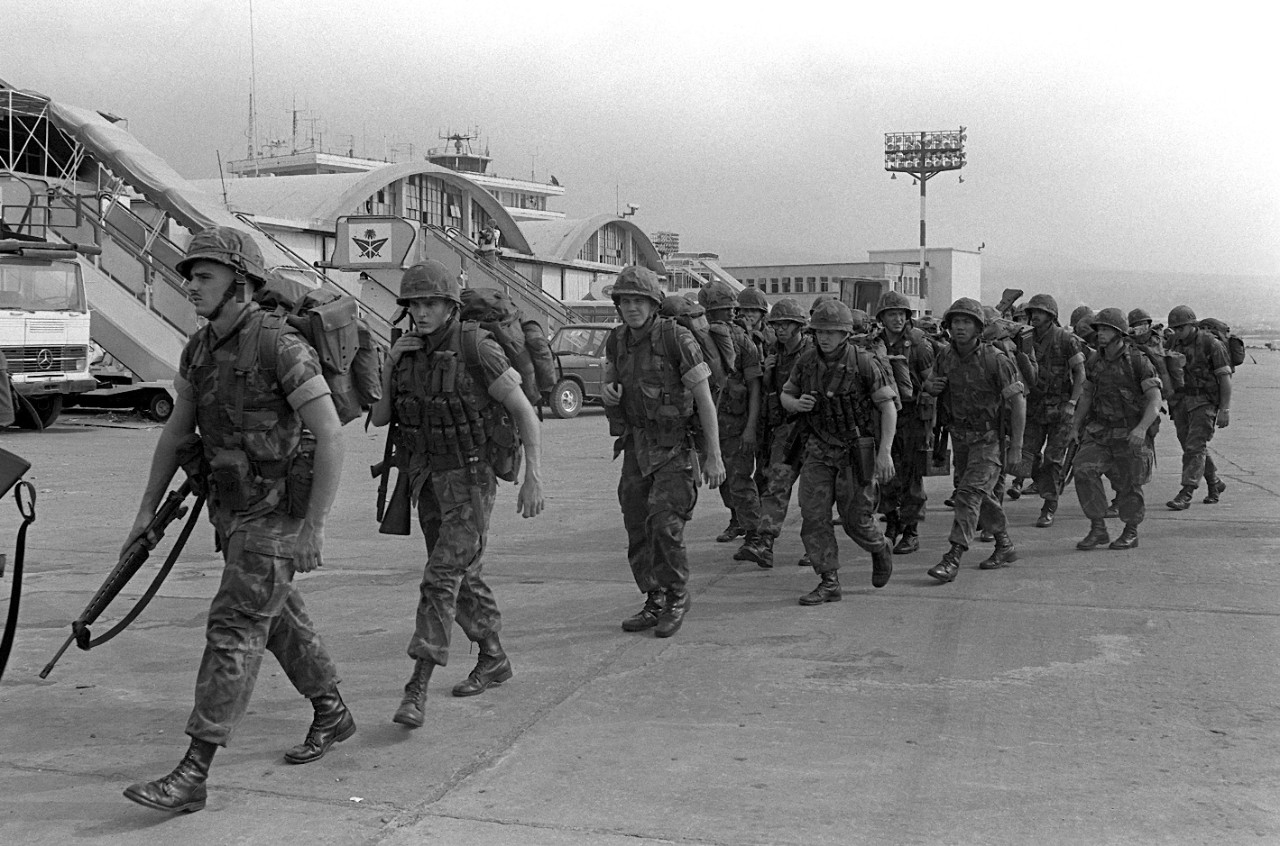

The Marines were in Beirut because Israel’s 1982 invasion had transformed an already brutal Lebanese civil war. Israel drove to Beirut to force out the Palestine Liberation Organization and reshape Lebanon’s political order. Bashir Gemayel was elected president with acknowledged Israeli backing and was assassinated weeks later. Phalangist forces then entered the Sabra and Shatila refugee camps inside an Israeli-controlled area and massacred Palestinian civilians. Israel’s own Kahan Commission later held Defense Minister Ariel Sharon personally responsible for ignoring the danger of bloodshed and revenge.
President Reagan sent the Marines back into Beirut after those events as part of a multinational force intended to support the Lebanese government and stabilize the capital. Iran’s Revolutionary Guards deployed to Lebanon in 1982 and built influence among Lebanese Shia factions as the Israeli invasion and occupation transformed the country. U.S. government histories later described Hezbollah as emerging from those factions in response to the Israeli invasion while receiving Iranian support. Iran armed, trained, and supported the force that became Hezbollah while Israel’s war and occupation created the environment in which that force grew.
In October 2026, U.S. and Israeli forces are again in direct conflict with Iran while more than 50,000 American service members are operating across the Middle East. Americans are once again carrying out policy in a region where intelligence held by allies and national agencies can determine whether a threat reaches the people exposed to it in time.
My uncle Joseph was one of the Americans who survived the 1983 bombing. Decades later, a federal court recognized the severe emotional injury he carried from it and awarded damages for that harm and the economic losses that followed. For me, the government record is inseparable from family history because warnings were circulating and senior officials were debating the Marines’ vulnerability while the men living at the airport carried the consequences of every failure in that system.
The Warnings Were Already There
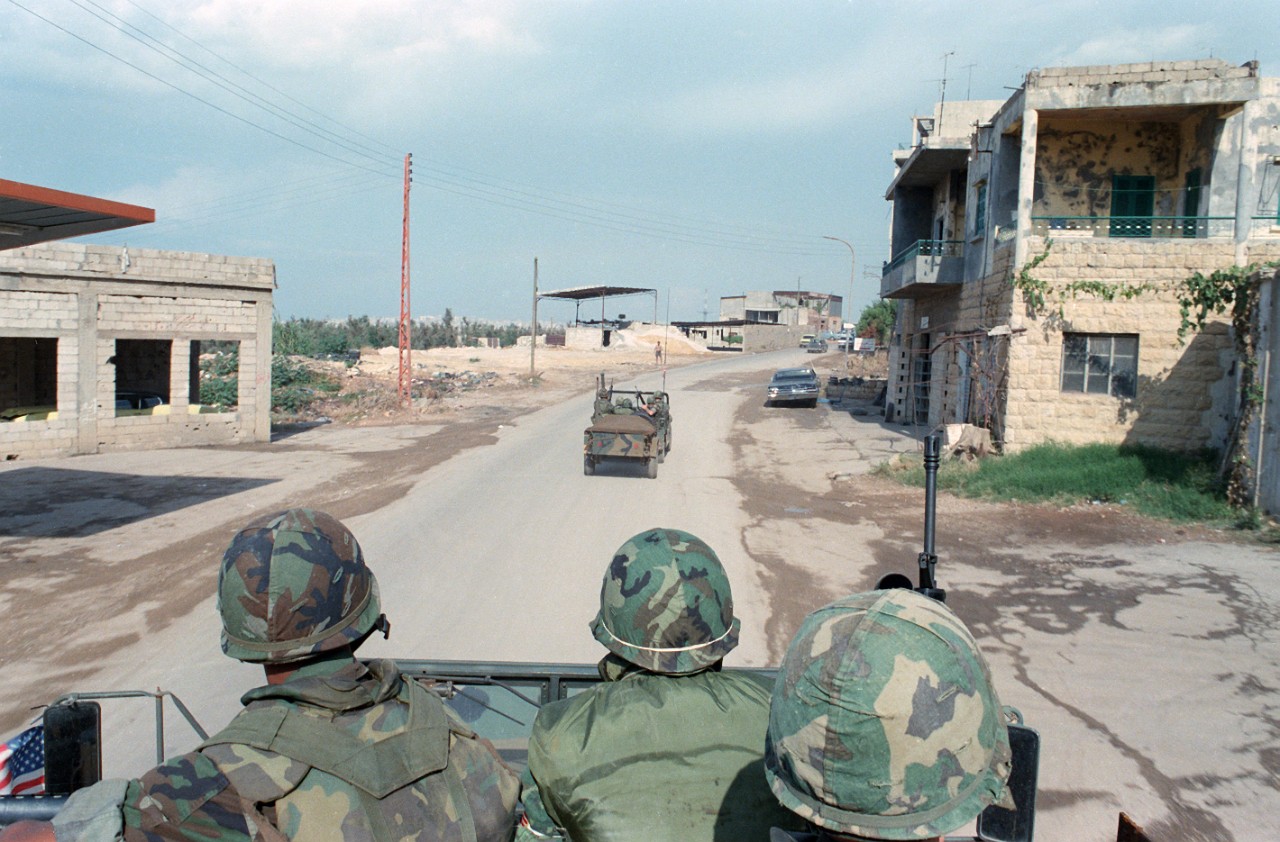
One of the clearest warnings in the Long Commission came after the April 18 bombing of the U.S. Embassy in Beirut. European Command’s senior security official concluded that the embassy bombing was the prelude to a more spectacular attack and that American military forces were the most defined and logical target. European Command responded by creating an Office of Military Cooperation Lebanon Security Working Group to track the terrorist threat day by day, while a counterintelligence and security specialist was sent to Beirut to assist the OMC commander and keep European Command informed.
OMC reacted by dispersing American personnel because its advisers believed determined terrorists could penetrate guarded hotels and attack a concentrated target. At Beirut International Airport, roughly 350 Marines were concentrated in the battalion headquarters building because its reinforced construction offered protection from shelling and small-arms fire. The Long Commission later described the two commands as preparing for different threat pictures inside the same city.
The Commission also recorded that the antiterrorism official met with the commander of the U.S. Multinational Force and discussed the terrorist threat and OMC’s decision to disperse personnel. The same Commission later found that European Command, the Marine Amphibious Unit, and the antiterrorism office had failed to coordinate their approaches. One part of the American system was dispersing personnel because it feared a spectacular terrorist attack while hundreds of Marines remained concentrated in a single headquarters building at the airport.
By autumn, the Marines had their own stream of vehicle-bomb warnings coming from Lebanese security services. Multinational-force intelligence officers met regularly with Lebanese security officials, who supplied descriptions and license numbers for suspected car bombs that were copied to Marine posts. Geraghty later said at least one hundred potential car bombs had been identified during the 24th Marine Amphibious Unit’s deployment. A summer counterintelligence review reportedly recommended that trucks be visually inspected for explosive devices, while an October 19 car bomb wounded four Marines traveling in a convoy only four days before the barracks was destroyed.
A “Spectacular Action Against The United States Marines”

On or about September 26, 1983, U.S. intelligence intercepted a communication that later became one of the most consequential pieces of evidence in the Beirut litigation. The federal court in Peterson described the message as coming from Iran’s Ministry of Information and Security to Ali Akbar Mohtashemi, Iran’s ambassador in Damascus. According to the court’s account of Adm. James A. Lyons’s testimony, Mohtashemi was directed to contact Hussein Musawi of Islamic Amal and encourage attacks against the multinational force in Lebanon. The instruction called for a “spectacular action against the United States Marines.”
Peterson places the first named senior Navy receipt on October 25. The Chief of Naval Intelligence notified Lyons, who immediately took the information to the Secretary of the Navy and the Chief of Naval Operations. That sequence leaves nearly a month between the intercepted Iranian communication and the senior Navy briefing documented in the court record.
Geraghty later wrote that the intercepted intelligence concerned an attack on the Marines at Beirut International Airport and that his command did not receive it before October 23. Lyons later said he asked the General Accounting Office to investigate where the message had gone and never received a satisfactory answer. A late-September intelligence communication called for a spectacular action against the United States Marines, while the first named senior Navy receipt in the court record appears two days after 241 Americans were killed.
What Israel Knew

Israel was already embedded in the chain of events that produced the Beirut crisis. Its military invaded Lebanon in 1982, occupied territory, backed Lebanese actors, and remained a major force in the country while the Marines were deployed. The State Department later described Hezbollah as forming in response to the Israeli invasion, while a CIA assessment said the prolonged occupation radicalized many Lebanese Shias as Iran’s Revolutionary Guards expanded Tehran’s influence from the Bekaa Valley.
The United States and Israel had established military and intelligence liaison channels throughout the Lebanon crisis. In a later firsthand interview, Capt. Kevin McCarthy, the 24th Marine Amphibious Unit’s intelligence officer, described direct operational contact with an Israeli officer in June 1983. Israeli military and intelligence services were operating throughout the theater while American officials relied on Israeli reporting about Lebanon, giving Israeli officers access to U.S. counterparts while their own forces controlled territory and collected intelligence inside the country.
The Israeli-warning story was already in print by 1989. Naval analyst Norman Polmar wrote in Proceedings, the professional journal of the U.S. Naval Institute, that Israel had provided information about threats to Americans in Arab countries, including warnings concerning the Marine barracks bombing. Polmar’s footnote said much of the article was informed by conversations with senior Israeli military officers. That account was public before Victor Ostrovsky’s 1990 book, so the public claim that Israel warned about the barracks attack did not originate with Ostrovsky.
Ostrovsky, a former Mossad officer, later supplied the more specific allegation. He wrote that a Mossad source reported a large Mercedes being modified to carry an exceptionally large explosive load, then described Mossad protecting the source while giving the United States a broader warning. On Ostrovsky’s account, Israeli intelligence possessed threat detail substantially more specific than what reached the Marines at Beirut International Airport.
Israel denied Ostrovsky’s account. Polmar’s 1989 article had already reported that Israel provided warnings concerning the barracks bombing, while Ostrovsky later alleged that Mossad held the Mercedes detail and protected the source. On Ostrovsky’s account, Israeli source protection was placed ahead of giving the Americans the fullest threat picture available to Mossad while hundreds of servicemembers remained concentrated at the airport.
Arms To Iran Before Iran-Contra
Israel was selling arms to Iran during the same period that American Marines were being drawn deeper into the Lebanon crisis. In 1981 and 1982, Ariel Sharon pressed U.S. officials over Israeli transfers of U.S.-origin military equipment to Tehran, while Israeli shipments also moved through private dealers and third-country intermediaries. Sharon publicly said Washington had been informed about at least some of the transfers, while U.S. officials disputed that they had approved them and said the United States had discouraged the sales. Israeli arms still moved toward Iran while official U.S. policy restricted military sales to Tehran.
The formal arms-for-hostages operation that became Iran-Contra emerged in 1985, but the mechanism had predecessors in the earlier Israel-Iran arms trade. Israel had already used its own stocks, U.S.-origin equipment, private dealers, and intermediaries to supply Tehran. The independent counsel’s Iran-Contra report states that by August 1985 Israel had obtained, through National Security Adviser Robert McFarlane, President Reagan’s approval to sell U.S. arms to Iran and replenish Israeli stocks. McFarlane had already been one of the central Washington officials directing Lebanon policy in 1983.
The contradiction runs through the period. Israel’s invasion and occupation helped radicalize Lebanese Shia communities while Iran moved Revolutionary Guards into the Bekaa Valley and built the network that became Hezbollah. Israel was also maintaining an arms relationship with Tehran. Washington was trying to contain Iranian influence in Lebanon while Israeli military matériel continued moving toward Iran despite official U.S. policy aimed at restricting those transfers.
The explosive trail in the barracks case points directly to Iran. In the Peterson litigation, FBI and ATF experts identified the truck bomb’s explosive as bulk PETN, and testimony stated that bulk PETN was manufactured in Iran at the time. The federal court found that Iran and its intelligence apparatus played crucial roles in planning and ordering the attack. The Israeli arms-to-Iran history is a separate policy record. Israel appears in the Beirut chain as the invading and occupying power whose war helped produce Hezbollah’s recruiting environment, as an intelligence service collecting inside Lebanon, and as a government that maintained arms transfers to Iran during the same period.
A Command System That Did Not Move Information Cleanly
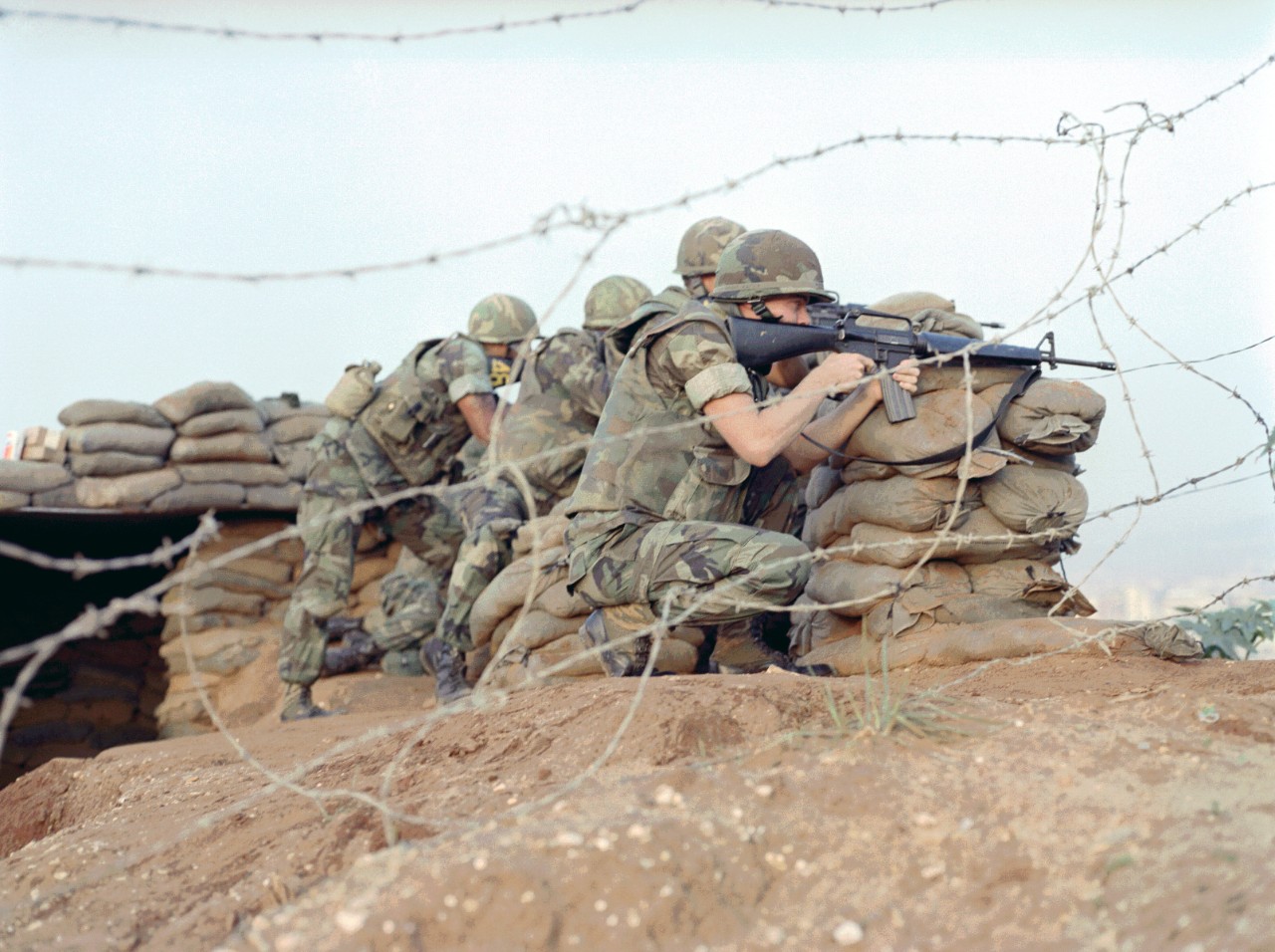

The command structure explains how information could exist inside the American government without automatically reaching the Marines at the airport. Col. Timothy Geraghty commanded the 24th Marine Amphibious Unit in Beirut, but his reports moved through Navy task-force headquarters and the Sixth Fleet while U.S. European Command held theater responsibility. Army Brig. Gen. Carl W. Stiner was also in Beirut as the Joint Chiefs’ representative with direct communications back to Washington. A State Department case study later acknowledged that European Command sometimes received Joint Chiefs instructions based on information and recommendations European Command itself had never seen.
The September 1983 battle over the Lebanese mountain town of Suq al-Gharb exposed that parallel channel. Marine Corps records and later participant testimony describe Lebanese commander Ibrahim Tannous seeking American naval gunfire as his forces came under pressure, with Geraghty initially declining the request. Tannous then went to Stiner, whose direct Joint Chiefs connection allowed the request to move through Robert McFarlane’s Washington channel. Military information and requests could move around the normal theater chain and still produce decisions the Marines were expected to carry out.
For the Marines at Beirut International Airport, those bureaucratic differences reached all the way down to the rules governing a vehicle approaching a checkpoint. After the April embassy bombing, Marines protecting relocated embassy facilities received explicit rules allowing them to treat a vehicle that breached a barricade as a hostile act and use force to stop it. The Marines at the airport remained under an older rules framework even while vehicle-bomb warnings were circulating. The Long Commission later concluded that the stronger vehicle-defense rules used for embassy security should have been extended to the entire American multinational force.
My uncle was serving inside that command structure. Joseph survived the bombing that followed, and the federal court record later recognized the severe emotional injury and economic damage he carried from it. When this piece talks about rules written in Washington, warnings moving through intelligence channels, or commanders being left with different threat pictures, those decisions end with actual people. In my family, one of those people is Joseph.
Washington Debated The Risk While The Marines Stayed Put

Five days before the bombing, the State Department told reporters that the Marines were being deliberately targeted by groups trying to undermine Lebanon’s political reconciliation process. Reagan’s private diary from the same period records his national security team trying to prevent further Marine deaths while avoiding what he regarded as a serious political defeat. Force protection and the political cost of changing course were being weighed in the same White House discussion.
The policy papers from the October 18 meeting lay out the dispute inside the administration. State Department officials wanted the Marine presence to continue while acknowledging that more had to be done to protect American forces. McFarlane viewed the U.S. relationship with Israel as leverage against Syria, weaving Israel directly into the strategy that kept Washington engaged in Lebanon. Weinberger and Gen. John Vessey were more willing to reduce or end the ground exposure. The fight in Washington centered on how much danger the United States would continue to accept in order to preserve its Lebanon strategy.
The next day, Reagan was asked publicly why the Marines remained on the exposed airport terrain instead of being moved to more defensible positions. He acknowledged that the administration was asking itself the same question and said he was pressing his advisers to consult the commanders on the ground about ways to make the Marines safer without abandoning the mission. Relocation and stronger protection were already live questions at the presidential level while the force was still sitting in the position that would be attacked.
Members of the House Armed Services Committee who had recently visited Beirut met with Weinberger on October 20 to raise the Marines’ increasing vulnerability. Rep. Samuel Stratton had written favorably about the mission earlier that month after seeing the force in Lebanon, then wrote on October 21 that recent attacks on the Marines were deliberate and ominous and that the changed conditions required a new appraisal of the deployment. Stratton’s reversal was written before the barracks bombing and records the concern that already existed in Washington.
Two days before the bombing, Weinberger put concrete alternatives on paper. His memorandum described the Marines at the airport as vulnerable to factional attack and included options that would reduce their exposure ashore or move them back to ships while preserving naval support. A separate seven-page Defense report dated October 21 was sent to Reagan through McFarlane on October 22 and remains withheld under a national-security exemption. By the time the truck reached the Marine compound on October 23, Washington had already spent days debating the danger of the position and whether the Marines should remain there.
Forty-three years later, Joseph is still living with damage the federal court record recognized decades after the bombing. The families of 241 Americans did not get their sons, brothers, husbands, fathers, and friends back. Before the truck reached the building, American agencies had accumulated warnings about attacks on U.S. forces, Israel was operating inside Lebanon’s military and intelligence environment, and senior officials in Washington were already debating the Marines’ vulnerability at the airport.
In October 2026, U.S. and Israeli forces are again fighting Iran while more than 50,000 American service members operate across the Middle East. Current operations again place American forces inside an intelligence relationship in which allied collection, national dissemination, command authority, and force protection can converge on the same threat. In the 1983 record, the Iranian communication calling for a “spectacular action against the United States Marines” was intercepted in late September, the first named senior Navy briefing documented in Peterson came on October 25, and Geraghty said his command did not receive that intelligence before the bombing. Joseph had already survived the blast two days earlier.